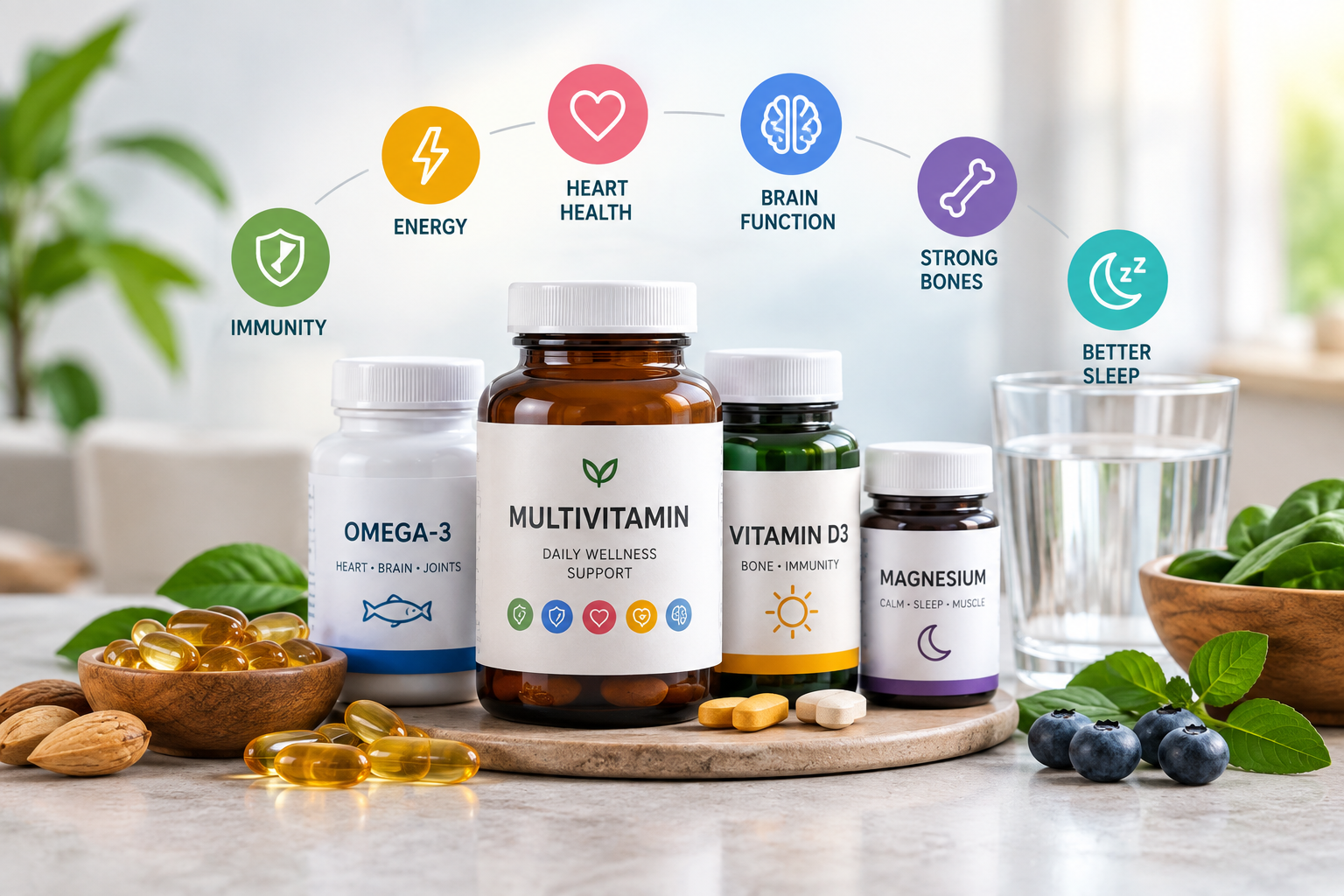
Supplementing with wellness products has now become part of most people’s daily lives. Quoting various vitamins, minerals, probiotics, and even herbal supplements you will find a lot of different products at pharmacy chains and social media promoting increased energy, enhanced sleep quality, better immunity, etc. It is necessary to understand the nature of these substances and what effects one can expect before introducing some of them into the regimen.
What Are Daily Wellness Supplements?
Dietary supplements are items designed to provide foods or nutritional elements in your diet. The NIH Office of Dietary Supplements indicates that they can include vitamin, minerals, herbal and plant origin, amino acids, different beneficial bacteria and enzymes, and can be found in various forms: tablets, capsules, powders, and liquids. The main term in a phrase “dietary supplement” is a word “supplement”, meaning that such items should provide an addition to your diet rather than replacing it.
Yerko dietary supplements are not drugs and are not controlled by the FDA the same way as medications are.
Why People Take Them
There are a number of factors that can vary from case to case; nevertheless, there are several significant reasons that pop up frequently:
- The need to fill the identified gap in nutrition based on the medical prescription obtained based on testing results (e.g. to boost the level of iron or vitamin D)
- Support of the specific life period which requires changes in diet (e.g. pregnancy, aging)
- Restrictions in diets which prevent one from having sufficient amounts of necessary substances from food (e.g. vitamin B12 for vegetarians)
- Regular health improvement and sleep increase programs.
- The last aspect needs to be treated with caution since this area of claims is considered to be the least regulated.
Common Types of Daily Wellness Supplements
The following categories appear regularly in daily schedules:
- multivitamins – a large mixture meant to bridge nutrition gaps not specific to particular need or purpose.
- Vitamin D – people who enjoy little sunlight consume it but individual needs vary from person to person and location to location.
- Omega-3 (fish oil) – typically utilized for routine heart health and joint support.
- Probiotics – aimed at helping digestion, although the research varies across products.
- Magnesium – usually promoted for sleep and recovery purposes.
Keep in mind that the information in this list is just that – information, not a recommendation.
What to Check Before You Start
A few practical checks apply to any daily wellness supplement you’re considering:
- Read the Supplement Facts label — check the actual dose per ingredient, not just the marketing claims on the front of the package
- Look for third-party testing seals (such as USP or NSF), which verify that a product contains what the label claims
- Check for interactions — some supplements affect how prescription medications are absorbed or metabolized
- Be skeptical of “cure-all” or dramatic claims — legitimate supplements support general health; they don’t treat or cure specific medical conditions
- Start with one new supplement at a time, so if you notice a reaction, you know what caused it
The FDA’s consumer guidance on dietary supplements recommends talking with a healthcare provider before starting any new supplement, especially if you’re pregnant, nursing, managing a chronic condition, or taking prescription medication.
Supplements Aren’t a Substitute for Basic Habits
It is vital to state again that no supplement is as good as the essentials: a balanced diet, exercising, sleeping enough, and drinking water. Hydration is one area in which people look for supplements instead of just drinking enough water. If you need detailed directions for keeping hydrated, read our article, “5 Tips for Staying Hydrated,” which contains good tips that don’t require supplements at all.
Supplements are acceptable once all of the basics have already been covered.
When to Talk to a Doctor First
Consult your doctor before starting daily health supplements if you:
- Are pregnant or nursing
- Are taking any prescription medication
- Have any health issue that could be chronic (such as a kidney, liver, heart or thyroid disease, for instance)
- Would prefer to take a higher dose supplement or one that is different from multivitamins
- Are thinking about giving a supplement to a child
Conclusion
Taking wellness supplements on a daily basis could contribute positively to one’s wellness routine, though they should primarily be viewed as additions to the essential components of a good wellness plan: nutritious diet, sound sleep, exercise, and hydration. It’s very important to read the label in order to figure out potential problems and contact a doctor if one takes medications or suffers from an illness. Moreover, it’s preferable to stick to easy daily habits (like drinking enough liquid) instead of adding supplements directly into one’s routine.
Frequently Asked Questions
Is it vital for everyone to use daily wellness supplements?
No. A varied diet generally provides all essential nutrients to the body. Supplements are used in situations of specific nutrients’ deficiency rather than as an obligatory requirement.
Are wellness supplements regulated in the same way as drugs are?
No. The FDA does not evaluate dietary supplements and their effectiveness before they are sold.
Can I take lots of wellness supplements in one day?
There are some that can be taken together. However, not all supplements can be taken together, nor can they all be taken with medicines as some combinations can be risky. Therefore, it is wise to try taking the supplements one at a time and to consult your doctor if several pills are involved.
Are supplements good enough to substitute for a healthy diet?
The answer is no. The purpose of supplements is to complement the daily diet and not substitute for it. Foods rich in nutrients provide not only nutrients but also other important substances that supplements do not provide at all.
What is a way to check the quality of a supplement?
Be sure you get a supplement that has been tested by a third party (for example, USP or NSF) and clearly states the Supplement Facts, and provides the actual readings of doses