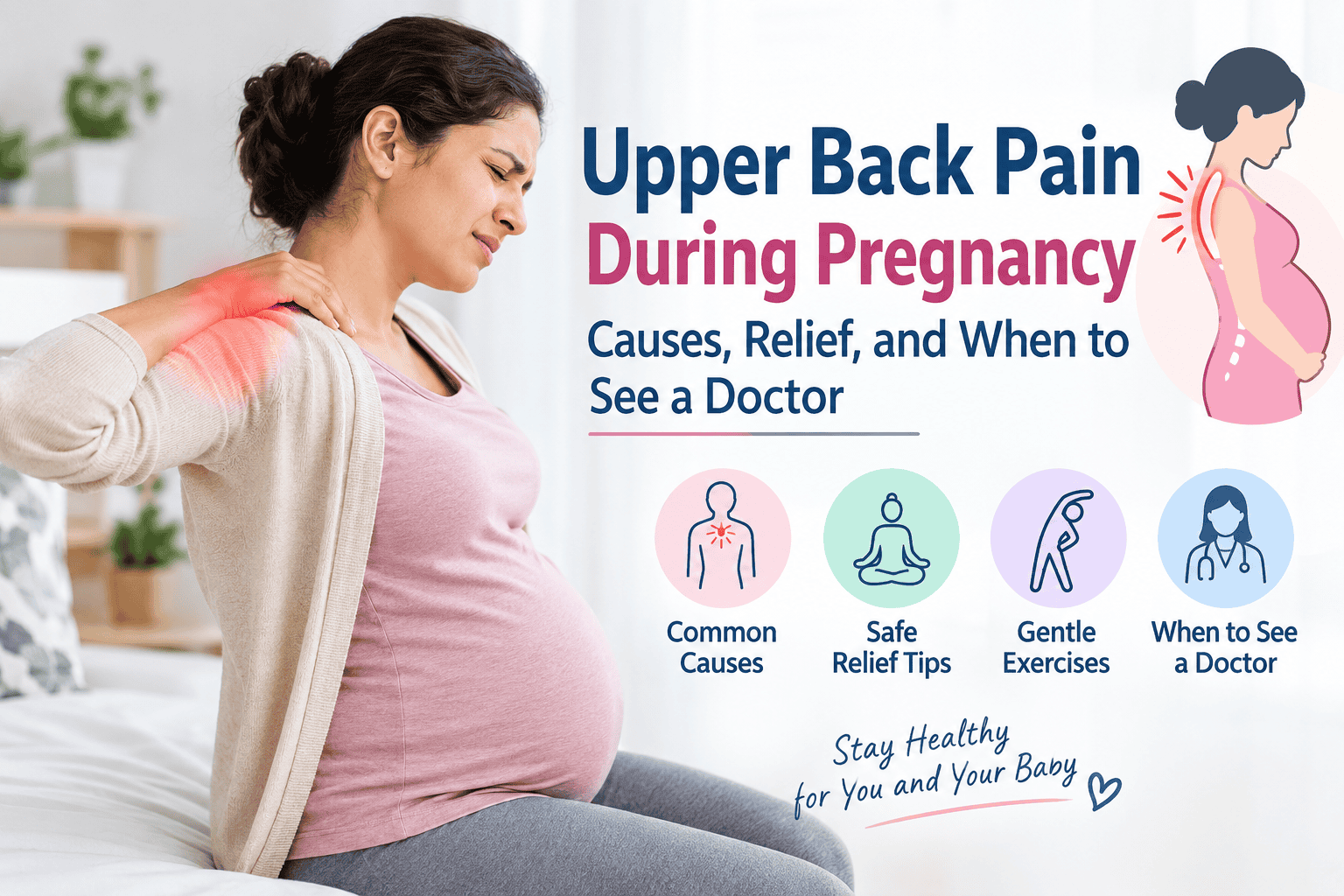
Upper back pain during pregnancy is a common discomfort that can become more noticeable as the body changes throughout pregnancy. While mild back pain is often related to posture, muscle strain, and changes in body weight, persistent or severe pain should not be ignored.
Pregnancy can affect the muscles, joints, ligaments, and the way you sit, stand, and move. These changes may put additional stress on different areas of the back.
In this guide, we explain the common causes of upper back pain during pregnancy, simple ways to relieve it, exercises that may help, and warning signs that require medical attention.
What Does Upper Back Pain During Pregnancy Feel Like?
Upper back pain usually occurs between the shoulders or around the upper part of the spine. It may feel like:
- A dull or aching pain
- Muscle tightness or stiffness
- Soreness between the shoulder blades
- A burning or tired feeling in the upper back
- Pain that becomes worse after sitting or standing for a long time
- Discomfort when changing positions
The intensity can vary from mild discomfort to more persistent pain.
Is Upper Back Pain Normal During Pregnancy?
Mild back discomfort can be normal during pregnancy, particularly as your body changes and your posture adapts to a growing abdomen.
Pregnancy-related hormonal changes can make ligaments softer and more flexible. At the same time, changes in body shape and weight can place additional stress on the back and supporting muscles.
However, severe, sudden, persistent, or unusual upper back pain should be discussed with a healthcare professional, especially if it occurs with other symptoms.
Common Causes of Upper Back Pain During Pregnancy
1. Changes in Posture
As pregnancy progresses, the growing abdomen can change your center of gravity. You may unconsciously adjust the way you stand or walk, which can increase strain on your back muscles.
Poor posture while sitting at a desk, using a phone, or working for long periods can make upper back discomfort worse.
2. Growing Breasts
Breast enlargement is common during pregnancy. Additional weight at the front of the body can contribute to tension in the shoulders and upper back.
Wearing a supportive, comfortable bra may help reduce some of this strain.
3. Muscle Strain
Pregnancy can change the way you perform everyday movements. Lifting objects, reaching, bending, or twisting repeatedly may strain the muscles around the upper back and shoulders.
It is generally recommended to avoid heavy lifting during pregnancy and to use safe lifting techniques when necessary.
4. Sitting for Long Periods
Spending several hours sitting without changing position can cause stiffness and muscle tension.
This can be particularly noticeable if your chair does not provide adequate back support.
5. Stress and Muscle Tension
Stress can cause people to unconsciously tighten their shoulder and upper-back muscles. This may contribute to aching or stiffness.
Gentle movement, relaxation techniques, and appropriate rest may help.
6. Changes in Body Weight
Pregnancy involves gradual changes in body weight and body shape. These changes can alter the mechanical load placed on muscles and joints.
As the body adapts, some women may experience back discomfort.
How to Relieve Upper Back Pain During Pregnancy
There are several simple strategies that may help manage mild pregnancy-related back discomfort.
Improve Your Sitting Position
Try to keep your back supported when sitting. Avoid staying in the same position for long periods.
You can also:
- Keep both feet comfortably supported
- Avoid slouching
- Use a supportive chair
- Take regular movement breaks
- Keep frequently used items within easy reach
Good posture and appropriate back support can reduce unnecessary strain.
Stay Gently Active
Unless your doctor or maternity care provider has advised you to avoid exercise, gentle physical activity can help maintain muscle strength and mobility.
Walking, pregnancy-appropriate exercise, and other activities recommended by your healthcare professional may help reduce back discomfort. NHS guidance notes that pregnancy exercise can strengthen muscles and may help ease backache.
Try Gentle Pregnancy Exercises
One commonly recommended pregnancy back exercise starts on your hands and knees.
Start with your knees under your hips and hands under your shoulders. Keep your back in a comfortable neutral position. Gently engage your abdominal muscles and slowly round your back, then return to the neutral position.
Move slowly and only within a comfortable range.
If an exercise causes pain, stop and speak with your healthcare professional. NHS guidance describes this type of gentle exercise as an option for easing pregnancy-related backache.
Use Warmth for Muscle Discomfort
A warm bath may help relax tense muscles and provide temporary relief from back discomfort.
Avoid excessive heat and follow your healthcare provider’s advice about safe heat use during pregnancy.
Get Enough Rest
Pregnancy can be physically demanding, and tired muscles may become more uncomfortable.
Try to balance activity with adequate rest. If a particular activity consistently makes the pain worse, reduce or modify it.
Consider Prenatal Physiotherapy
If upper back pain continues or interferes with daily activities, talk to your doctor, midwife, or another qualified maternity healthcare professional.
An obstetric physiotherapist may be able to assess your posture and movement and recommend pregnancy-appropriate exercises.
When Should You Worry About Upper Back Pain During Pregnancy?
Most mild aches are not necessarily a sign of a serious problem. However, some symptoms alongside back pain require medical attention.
Contact your doctor, midwife, or maternity care provider if your back pain is severe, persistent, or concerning.
Seek urgent medical advice if back pain occurs with symptoms such as:
- Fever
- Vaginal bleeding
- Pain or burning when urinating
- Pain in your side or under your ribs
- Regular contractions or tightening
- Fluid leaking from the vagina
- Reduced or changed baby movements
- Severe or unusual pain
Back pain in the second or third trimester can sometimes be associated with early labour, particularly when accompanied by other labour symptoms.
If you develop sudden shortness of breath, chest pain, severe dizziness, or another potentially serious symptom, seek urgent medical care.
Can Upper Back Pain Be a Sign of Labor?
Back pain alone does not necessarily mean labor has started.
However, backache can occur as one of the signs of labor, particularly when accompanied by regular contractions, a “show,” or your waters breaking.
If you are less than 37 weeks pregnant and think you may be experiencing signs of labor, contact your maternity care provider promptly.
Frequently Asked Questions
Why does my upper back hurt during pregnancy?
Upper back pain during pregnancy can be related to changes in posture, body weight, breast size, muscle tension, and the way your body moves as pregnancy progresses.
Is upper back pain normal in the first trimester?
Some women experience back discomfort early in pregnancy. However, persistent or severe pain should be discussed with a healthcare professional rather than automatically being considered a normal pregnancy symptom.
How can I sleep with upper back pain during pregnancy?
Try to find a comfortable sleeping position with appropriate pillow support. A pillow can be used to support your body and reduce uncomfortable pressure.
If you are unsure which sleeping position is appropriate for your stage of pregnancy, ask your doctor or midwife.
Can I massage my upper back during pregnancy?
Gentle massage may help some people with muscle tension. However, if you have significant pain or other pregnancy symptoms, speak with your healthcare professional before relying on massage as treatment.
Can stretching help upper back pain during pregnancy?
Gentle, pregnancy-appropriate stretching may help reduce muscle tightness. Avoid aggressive stretching or movements that cause pain, and consider getting guidance from a qualified prenatal physiotherapist.
Final Thoughts
Upper back pain during pregnancy can be uncomfortable, but mild pain is often associated with the physical changes that happen during pregnancy. Improving posture, staying gently active, getting adequate rest, and using pregnancy-appropriate exercises may help manage discomfort.
However, severe or persistent pain should not simply be attributed to pregnancy. If upper back pain occurs with fever, bleeding, urinary symptoms, pain under the ribs, contractions, fluid leakage, reduced fetal movement, or other concerning symptoms, contact a healthcare professional promptly.
Medical disclaimer: This article is for general educational purposes and is not a substitute for personalized medical advice. If you are pregnant and concerned about pain or other symptoms, contact your doctor, midwife, or maternity care provider.