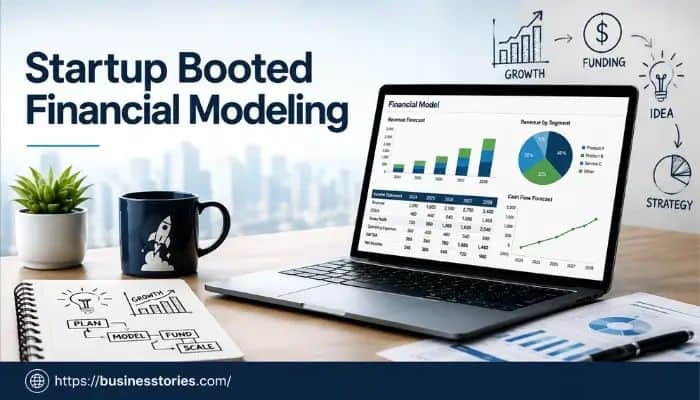
Launching a startup without outside funding is both exciting and demanding. Every decision carries more weight because the business depends on its own revenue rather than investor capital. That is where startup booted financial modeling becomes essential. A well-designed financial model helps founders understand cash flow, forecast growth, prepare for uncertainty, and make smarter business decisions without relying on guesswork.
Whether you’re building a software company, an online store, or a service-based business, creating realistic financial projections allows you to stay in control of your finances while growing at a sustainable pace.
What Is Startup Booted Financial Modeling?
Startup booted financial modeling is the process of creating financial forecasts specifically for self-funded businesses. Unlike venture-backed startups that often prioritize rapid expansion, bootstrapped companies usually focus on profitability, controlled spending, and steady revenue growth.
The model acts as a financial roadmap. It estimates future income, operating costs, cash balances, and profitability based on realistic assumptions rather than overly optimistic expectations.
Instead of asking, “How much can we raise?” founders ask, “How long can we operate with the revenue we generate?” That mindset changes every financial decision.
Why Financial Modeling Matters for Bootstrapped Startups
Operating without external funding means every dollar has a purpose. A financial model helps business owners answer important questions before problems arise.
Some of the biggest benefits include:
- Forecasting monthly revenue
- Tracking operating expenses
- Managing cash reserves
- Planning future hiring
- Setting realistic growth targets
- Identifying financial risks early
- Making informed pricing decisions
I once helped review a small startup’s budgeting approach, and seeing how a simple financial forecast exposed unnecessary spending reinforced how valuable careful planning can be before scaling.
Core Components of a Strong Financial Model
A useful financial model doesn’t have to be overly complicated. In many cases, simplicity creates better decision-making.
Revenue Projections
Estimate expected income based on customer acquisition, pricing, subscription renewals, product sales, or service contracts.
Rather than assuming explosive growth, use conservative estimates supported by historical performance or market research.
Operating Expenses
List every recurring cost, including:
- Employee salaries
- Software subscriptions
- Marketing expenses
- Office costs
- Professional services
- Hosting and technology
- Taxes and insurance
Accurate expense tracking prevents unpleasant surprises.
Cash Flow Forecast
Cash flow is often more important than profit.
A company may appear profitable on paper while struggling to pay monthly bills because customer payments arrive late or expenses increase unexpectedly.
Monthly cash flow forecasting helps founders understand exactly when money enters and leaves the business.
Profit and Loss Estimates
This section summarizes projected revenue, expenses, and expected profits over time.
It allows founders to evaluate whether growth is financially sustainable rather than simply increasing sales.
Scenario Planning
Markets change quickly.
Testing different situations prepares founders for uncertainty. Consider:
- Best-case growth
- Moderate growth
- Slower-than-expected sales
- Higher operating costs
- Seasonal revenue fluctuations
Planning for multiple possibilities reduces panic when conditions shift.
Bootstrapped Startups vs. Investor-Funded Businesses
Although both types of companies require forecasting, their financial priorities often differ.
| Area | Bootstrapped Startup | Investor-Funded Startup |
|---|---|---|
| Primary Goal | Sustainable profitability | Rapid market expansion |
| Spending Style | Careful and controlled | Higher upfront investment |
| Cash Management | Revenue-driven | Funding-driven |
| Growth Pace | Steady and measured | Aggressive scaling |
| Decision Making | Long-term stability | Faster market capture |
This comparison highlights why startup booted financial modeling emphasizes financial discipline rather than maximizing burn rate.
How Financial Modeling Supports Better Business Decisions
Imagine a software startup generating $18,000 in monthly recurring revenue. The founders want to hire two developers immediately.
Instead of making emotional decisions, they update their financial model.
The forecast reveals that hiring both employees would reduce cash reserves below a safe operating level within six months if customer growth slows by only 10%.
Rather than taking unnecessary risk, they hire one developer first while increasing customer acquisition. Six months later, stronger revenue comfortably supports the second hire.
That single modeling exercise prevents unnecessary financial pressure and keeps the business growing steadily.
Common Mistakes Founders Should Avoid
Even experienced entrepreneurs make forecasting mistakes. Fortunately, most are avoidable.
Overestimating Revenue
Many founders expect sales to increase faster than reality.
Build forecasts using achievable assumptions supported by actual customer behavior.
Ignoring Small Expenses
Small recurring costs add up quickly.
Monthly software subscriptions, payment processing fees, and operational tools can significantly affect profitability over time.
Forgetting Taxes
Taxes should never be treated as an afterthought.
Including estimated tax obligations creates far more realistic financial forecasts.
Never Updating the Model
A financial model isn’t a one-time document.
Update projections monthly or quarterly using actual performance data to improve forecasting accuracy.
Tips for Building Better Financial Forecasts
Creating useful projections doesn’t require advanced financial expertise.
Instead, focus on realistic assumptions.
Helpful practices include:
- Start with conservative sales estimates.
- Separate fixed and variable costs.
- Monitor cash flow every month.
- Track key business metrics consistently.
- Review projections against actual performance.
- Prepare backup plans for slower growth.
- Adjust assumptions whenever market conditions change.
Businesses that review their numbers regularly often make better strategic decisions because they respond to facts instead of assumptions.
How Financial Modeling Supports Long-Term Growth
Growth without financial planning often creates unnecessary pressure.
A carefully maintained model helps founders understand when to invest, when to reduce expenses, and when additional hiring becomes financially responsible.
It also improves communication with partners, lenders, and future investors should external funding eventually become part of the company’s strategy.
More importantly, it builds confidence. Instead of reacting to every financial challenge, founders can anticipate changes before they become serious problems.
Read More: How Was Teckaya Construction Equipment Founded?
Conclusion
Startup booted financial modeling is much more than creating spreadsheets filled with numbers. It is a practical decision-making tool that helps founders balance ambition with financial stability. By forecasting revenue, monitoring expenses, managing cash flow, and preparing for multiple outcomes, entrepreneurs can grow confidently without sacrificing long-term sustainability.
The strongest bootstrapped companies are rarely those with the biggest budgets. They are the ones that understand their finances deeply, adapt quickly, and make informed decisions based on reliable projections. Investing time in a thoughtful financial model today can save months of uncertainty tomorrow.
FAQs
What is startup booted financial modeling?
It is the process of forecasting revenue, expenses, cash flow, and profitability for self-funded startups to support informed financial decisions and sustainable growth.
Why is cash flow more important than profit?
Profit measures overall earnings, while cash flow shows whether a business has enough money available to cover everyday operating expenses and financial obligations.
How often should a startup update its financial model?
Most startups benefit from reviewing and updating their financial model every month. Regular updates improve forecasting accuracy and support better decision-making.
Can small startups benefit from financial modeling?
Yes. Even businesses with only a few customers gain valuable insights into budgeting, pricing, hiring, and future planning through realistic financial projections.
Is financial modeling only useful before launching a startup?
No. Financial modeling remains valuable throughout every stage of growth because it helps founders evaluate new opportunities, manage risks, and maintain financial stability as the business evolves.